WASPS
Wasp Control in Sussex & Morris County, NJ
Wasps can build nests around your home or business without much warning. A nest under an eave, inside a wall void, beneath a deck, or near an entryway can quickly become a safety concern as the colony grows.
Bustabug Pest Control provides professional wasp control in Sussex County, Morris County, and surrounding Northern New Jersey communities. We help identify the type of stinging insect, locate the nest, treat the colony, and address conditions that may contribute to recurring activity.
Whether you have noticed a few wasps around your property or discovered a large nest, professional treatment can help you deal with the problem safely.
Need help with a wasp problem? Contact Bustabug Pest Control to schedule an inspection.
Professional Wasp Control in Northern New Jersey
Not every stinging insect is the same. Yellow jackets, paper wasps, bald-faced hornets, and other wasps have different nesting habits and behaviors. Correct identification is an important first step in determining how the problem should be handled.
Wasps may become particularly noticeable during the warmer months. As colonies develop, you may see more activity around patios, decks, outdoor kitchens, garbage containers, gardens, and other areas where people spend time.
Some nests are easy to see. Others may be hidden inside walls, attics, soffits, landscaping, or other pTypes of Wasps and Stinging Insects We Treat
Different species require different approaches. Bustabug helps homeowners and businesses dealing with several common stinging insects found throughout Northern New Jersey.
Yellow Jackets
Yellow jackets are often associated with increased activity around homes during late summer and fall. They may nest underground, inside wall voids, or in other protected locations.
They can become a significant nuisance around outdoor areas and food sources.
Learn more about Yellow Jacket Control.
Bald-Faced Hornets
Bald-faced hornets build large paper nests that are often attached to trees, structures, eaves, or other elevated locations. Their nests can become difficult to ignore when they are close to areas people regularly use.
Learn more about Hornet Control.
European Hornets
European hornets are larger than many common wasps and may build nests in protected areas such as hollow trees, wall voids, attics, and other structures.
If you are unsure what type of hornet or wasp you have found, professional identification can help determine the appropriate course of action.
Learn more about Hornet Control.
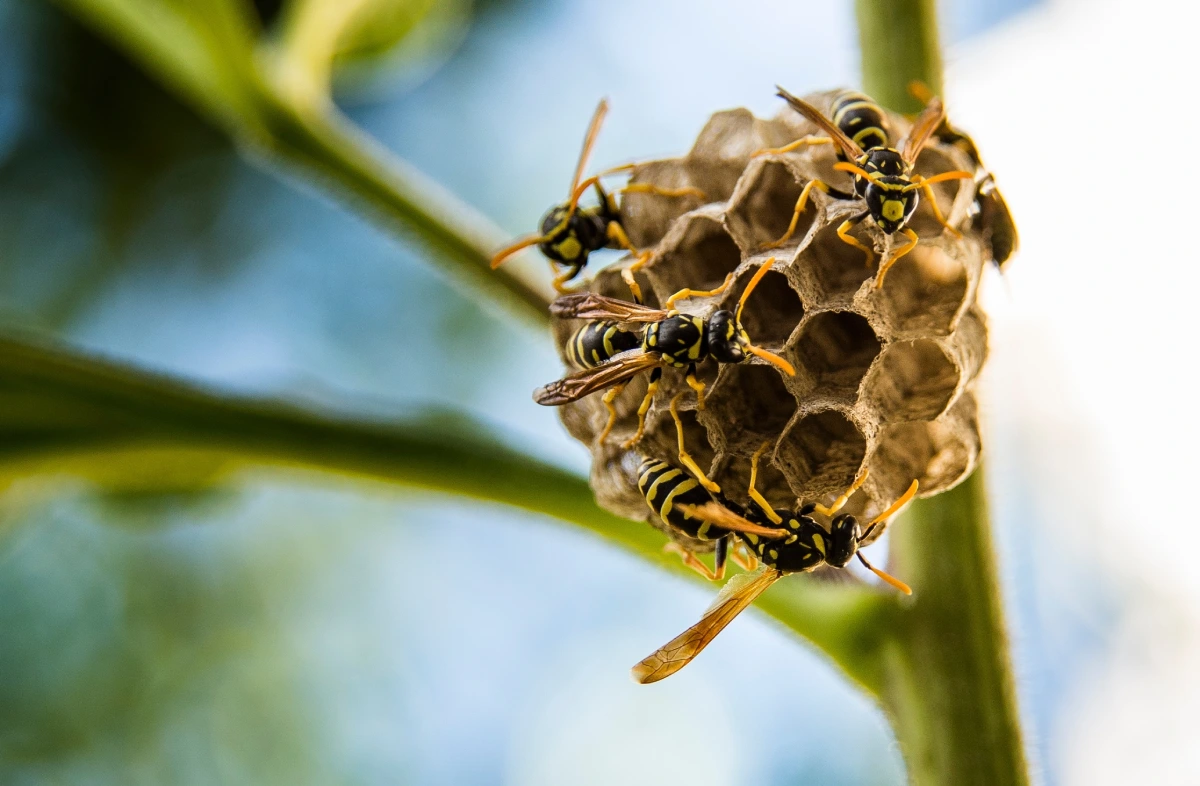
Paper Wasps
Paper wasps typically build exposed, umbrella-shaped nests under eaves, porch ceilings, overhangs, and other protected areas. Their nests may start small but can become more noticeable as the colony develops.
Learn more about Paper Wasp Control.
Where Do Wasps Build Nests?
Wasps look for locations that provide protection from weather and predators while giving the colony access to food and water.
Around Northern New Jersey homes, nests may be found:
- Under roof eaves and soffits
- Beneath decks and porches
- Around garages and sheds
- Inside wall voids
- In attics
- Around exterior light fixtures
- Under overhangs
- In trees and shrubs
- Inside hollow structures
- In or around landscaping
- Underground or near ground-level areas
A nest that appears to be outside may also have an entrance leading into a wall or another part of the structure.
If you notice wasps repeatedly entering and leaving the same location, avoid disturbing the area. The activity may indicate a nearby nest that is hidden from view.
For more information, see our guide on where stinging insects build nests around your home.
Wasp Nest Removal
Finding a wasp nest can be alarming, particularly when it is close to a door, walkway, play area, deck, or other frequently used part of your property.
Nest removal is not always as simple as knocking the nest down. An active colony may contain numerous insects, and disturbing the nest can cause defensive behavior.
Some nests are also located in difficult-to-reach areas or connected to hidden spaces within a structure.
Bustabug can evaluate the situation and determine the appropriate way to address the nest and the insects around it.
Learn more about professional wasp nest removal.
When Are Wasps Most Active in New Jersey?
Wasp activity changes throughout the year.
Spring
As temperatures rise, queens begin establishing colonies. Early-season activity may be limited, but nests can grow steadily as the season progresses.
Summer
Wasp colonies become larger and worker activity increases. You may begin noticing more wasps around outdoor areas, gardens, garbage containers, food, and other potential food sources.
Late Summer and Fall
This is often when homeowners notice the most troublesome yellow jacket activity. Established colonies are larger, and yellow jackets may become more noticeable around people, food, and outdoor gatherings.
Understanding seasonal activity can help you recognize a potential problem before it becomes a larger nuisance.
Read more about stinging insect season in New Jersey.
Why Do Yellow Jackets Become More Aggressive?
Yellow jackets can become particularly difficult to deal with later in the season.
Several factors can contribute to increased encounters, including larger colonies, changes in available food sources, and the behavior of mature colonies.
If yellow jackets are repeatedly flying around a particular area, don’t assume they are simply passing through. There may be a nest nearby.
Read why yellow jackets become more aggressive before winter to learn more about this seasonal behavior.
If yellow jackets are nesting around your property, professional yellow jacket control can help address the source of the activity.
What Should You Do If You Find a Wasp Nest?
The safest approach is to avoid disturbing an active nest.
If you discover one around your property:
- Keep children and pets away from the area.
- Avoid touching or knocking down the nest.
- Do not block a suspected nest entrance.
- Keep your distance from areas with heavy insect activity.
- Avoid attempting treatment if you are concerned about being stung.
- Contact a pest professional if the nest is active, difficult to reach, or located near a frequently used area.
It is especially important to avoid using dangerous homemade methods such as fire or gasoline. These approaches can create additional risks without solving the underlying pest problem.
Read more about why you shouldn’t knock down a wasp nest yourself.
Our Wasp Control Process
Bustabug takes a practical approach to stinging-insect problems.
1. Inspection
We evaluate the property and look for visible activity, nesting locations, entry points, and areas where wasps may be traveling.
2. Identification
Determining what type of stinging insect you’re dealing with helps us understand its nesting behavior and develop an appropriate treatment plan.
3. Treatment
Treatment is based on the location of the nest, the type of insect, the level of activity, and the conditions at the property.
4. Follow-Up and Prevention
After treatment, we can identify conditions that may contribute to recurring activity and recommend practical steps to reduce future problems.
The goal is not simply to eliminate the wasps you can see. We want to address the source of the activity whenever possible.
Why Professional Wasp Control Matters
An active wasp nest can present a greater challenge than a few individual insects flying around your property.
Trying to handle a nest yourself can create problems when:
- The species has been misidentified
- The nest is hidden
- The nest is inside a wall
- The colony is large
- The nest is high above the ground
- The nest is near an entryway or high-traffic area
- You have concerns about being stung
Professional pest control can help you avoid unnecessary exposure while addressing the source of the infestation.
How to Prevent Wasp Problems Around Your Property
You cannot eliminate every condition that attracts wasps, but several steps can make your property less attractive to stinging insects.
Consider:
- Keeping garbage containers tightly sealed
- Cleaning up spilled drinks and food
- Removing fallen fruit from the ground
- Keeping outdoor eating areas clean
- Inspecting eaves, soffits, and overhangs
- Sealing potential openings around the structure
- Keeping an eye on areas where wasps repeatedly enter and exit
- Addressing nests before they become larger problems
If you see consistent wasp activity in one location, look for the source rather than simply treating the individual insects you see.
Wasp Control in Sussex & Morris County
Bustabug Pest Control is a local, family-owned pest control company serving homeowners and businesses throughout Northern New Jersey.
We provide pest control services in Sussex County, Morris County, and surrounding communities, including areas such as Sparta, Vernon, Hamburg, Newton, Sussex, Andover, Lafayette, Denville, Morristown, Parsippany, and nearby communities.
Because local conditions influence pest activity, our familiarity with Northern New Jersey homes, properties, and seasonal pest patterns helps us provide practical recommendations for local customers.
Whether you have found a nest under your deck, noticed yellow jackets around your patio, or have wasps entering a wall or other part of your home, Bustabug can help you determine what you’re dealing with.
Frequently Asked Questions About Wasp Control
Are wasps dangerous?
Wasps can sting when threatened, and some species can become defensive when their nest is disturbed. The risk depends on the species, nest location, colony size, and proximity to people.
What is the difference between a wasp and a yellow jacket?
Yellow jackets are a type of wasp. The term “wasp” describes a broader group of insects with different species, nesting habits, and behaviors.
Where do wasps build nests?
Wasps may build nests under eaves, decks, porches, trees, shrubs, sheds, attics, wall voids, and other protected locations. Some species also build nests underground.
Should I remove a wasp nest myself?
It is generally best to avoid disturbing an active nest. Attempting to remove a nest can expose you to defensive insects, particularly if you cannot determine the species or the size and location of the colony.
What time of year are wasps most active in New Jersey?
Wasp activity generally increases during spring and summer as colonies develop. Yellow jacket activity can become especially noticeable during late summer and fall.
Can wasps build nests inside walls?
Yes. Some stinging insects can establish nests in wall voids or other protected areas of a structure. If you see insects repeatedly entering and leaving a small opening, there may be a hidden nest.
Will wasps come back after a nest is removed?
Removing a visible nest does not necessarily address conditions that attracted the insects to the property. Inspection and treatment of the underlying problem can help reduce the chance of recurring activity.
How quickly can Bustabug treat a wasp problem?
Treatment timing depends on the location of the property, the type of pest, and the nature of the problem. Contact Bustabug to discuss your situation and schedule an inspection.
Contact Bustabug for Wasp Control
Don’t let an active wasp nest take over your yard, porch, deck, or business property.
Bustabug Pest Control provides professional wasp and stinging-insect control throughout Sussex County, Morris County, and surrounding Northern New Jersey communities.
Call (973) 721-9197, fill out the online form, or email bustabugpestcontrol@gmail.com to schedule an inspection and find out how we can help with your wasp problem.
PEST SERVICES
TESTIMONIALS
Jonathan
One of the best companies in the area! I had a big issue in the house, and Rob was able to handle it in a timely manner. He did not mind answering all the questions My wife and I had. He answered them in professionally and respectfully manner. Very reasonable in price. I highly recommend them to anybody that’s looking to get rid of any type of Pest Control issue.